
In conversation with Professor Diana Eccles: Our University’s largest fundraising campaign to date
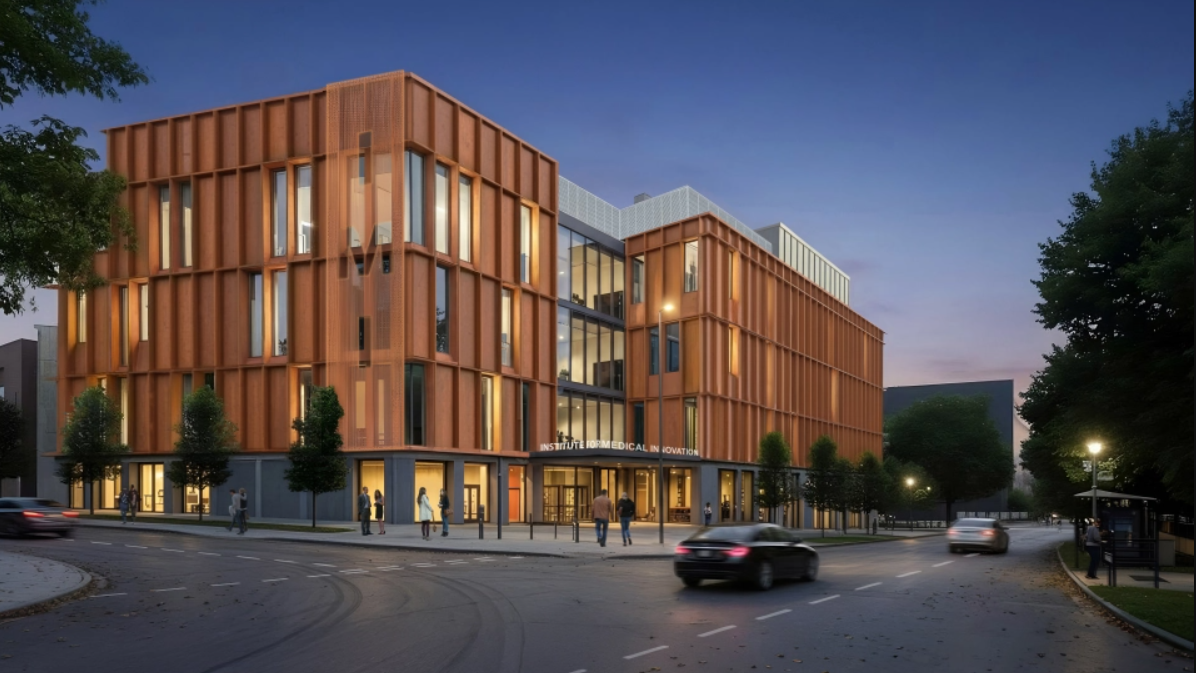
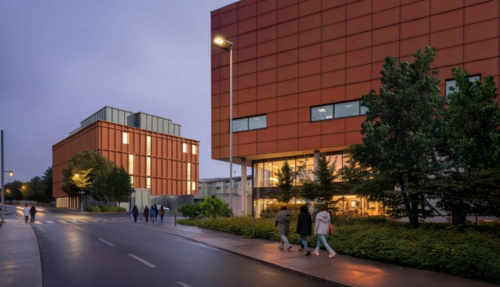
The University has launched its largest fundraising campaign to date: to raise £50m to help build the pioneering Institute for Medical Innovation (IMI).
Situated at the heart of University Hospital Southampton (UHS), the IMI will bring together engineers, mathematicians and scientists across different disciplines to tackle devastating diseases such as cancer, dementia, sight loss, infection and respiratory and allergic conditions.
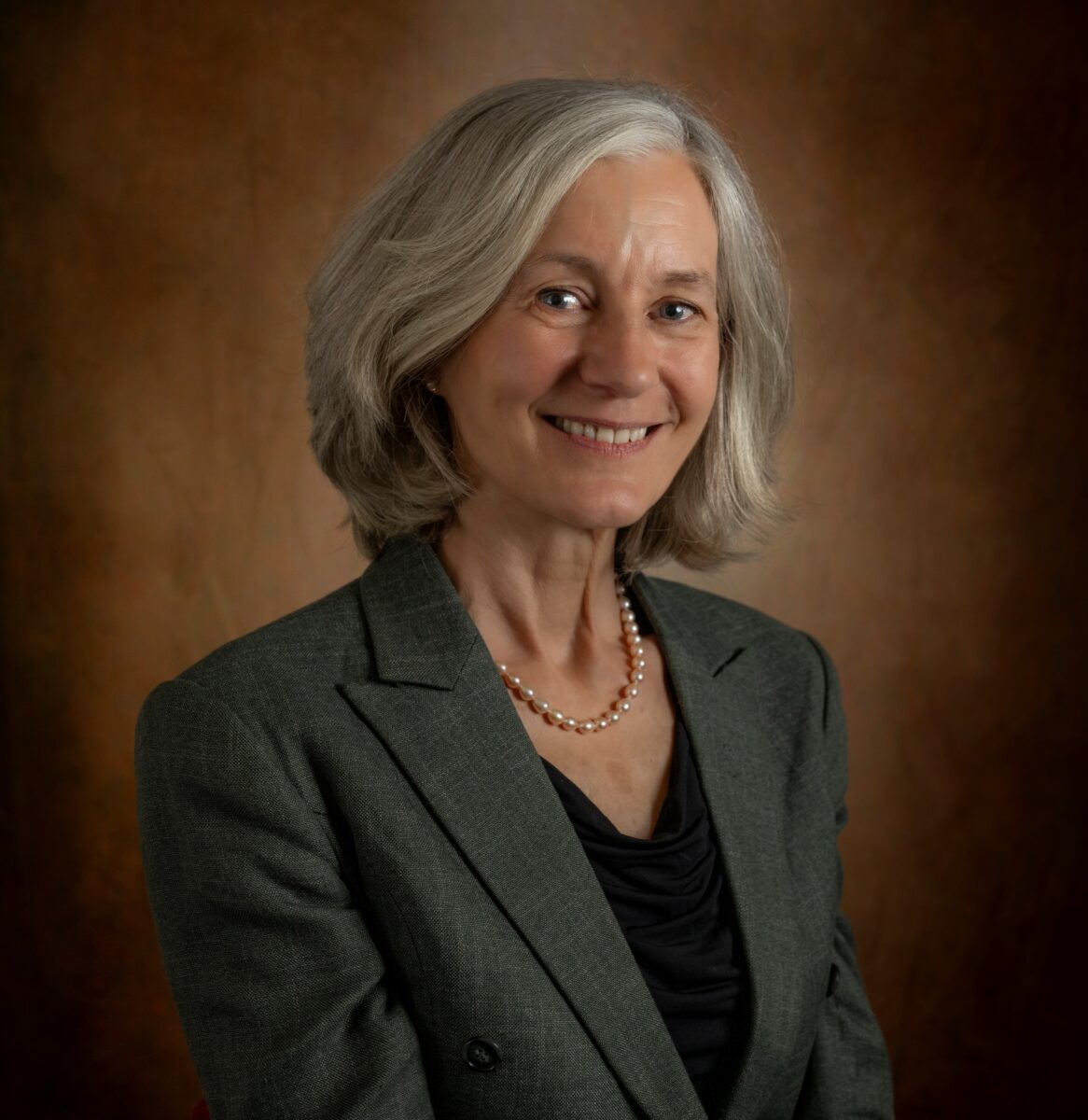
Dean of Medicine, Professor Diana Eccles has been instrumental in driving the IMI forward.
As she prepares to step away from the role she’s held for eight years, Diana speaks to Template Magazine about the ambitious fundraising campaign, how the IMI will change the way we carry out research, and her own family’s personal experience with dementia.
How will the IMI push our research forward that we’re not already doing?
“The power of the IMI lies in bringing people together from disciplines right across the University; it offers a physical hub where a real melting and melding of ideas and novel approaches will bring new insights and solutions to tackle several major diseases. Through advancing AI technology, the IMI will drive innovative approaches forward, and we will be able to analyse and apply the data to gain clinical insights and advance therapies and diagnostics.
“From the hospital’s point of view, the future position of the IMI at the front of the UHS site will be a symbol of the importance of research for modern healthcare, and hope for advancing better outcomes for some of the big health challenges that patients face day to day. It’s going to be a very powerful mix.”
How does the IMI fit into the University’s broader research and education ambitions?
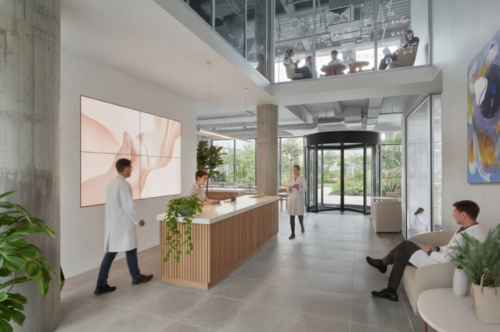
“The triple helix of research, education and enterprise is central to the University’s strategy, but these academic strands of the helix don’t happen in isolation. Those different pathways must be interwoven, which requires great communication and sharing of their respective strengths and interdependencies, where the whole is stronger than the parts. This will be true in the IMI. The IMI’s physical space is intentionally being designed around how people interact, creating far more opportunities for ideas and collaborations to flow than in the siloed research environments that have shaped the past 50 years.
“The IMI will boost our education ambitions. It’ll help us attract the best PhD students; they will have the facilities and the ability to draw on different disciplinary areas for supervision. The Medical Innovation Fund is already funding interdisciplinary PhD students who benefit from shared supervision across disciplinary divides. Those young ideas are the lifeblood of research at the University. Master’s students from all faculties will benefit from access to IMI facilities for research projects and we’re hoping it will increase the number of undergraduate medical students choosing to undertake an intercalated master’s degree.
“It will also help us attract the best staff. People come to Southampton because it’s a welcoming and supportive place to work, but if you’ve got cutting-edge facilities in a collaborative space, you can attract today’s top talent, as well as develop the superstars of the future. “
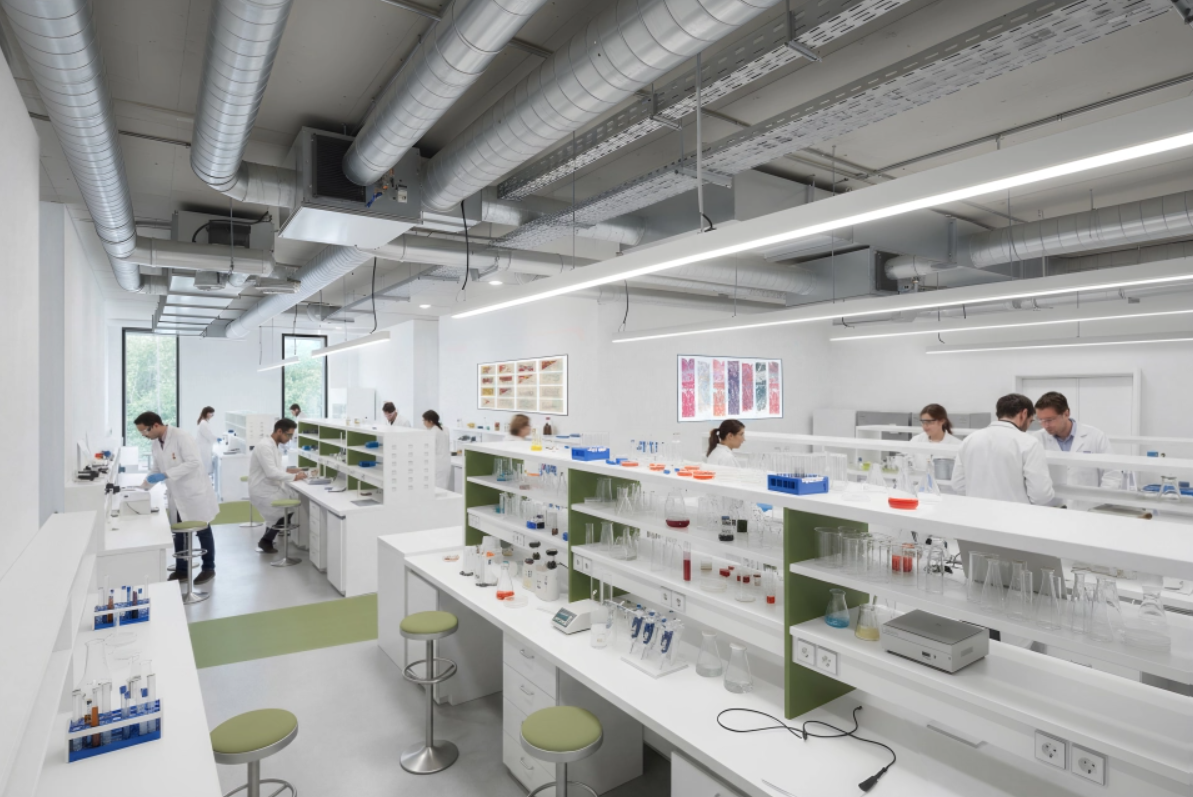
The IMI will focus on five areas: cancer, dementia, respiratory disease, infectious diseases and vision loss. Why these five areas?
“The technology within the IMI (AI, data science, spatial transcriptomics, and genomics) is disease agnostic, but the key disease areas that will be the IMI’s focus are all major health challenges where we already have very credible world-class research.
“Interdisciplinary research will be transformational for the global population. All of us will have some personal experience of one or more of those diseases, no question about it. It is about delivering something impactful that is relevant to everybody.
“What is also striking is how connected these five areas are at a biological level and the immune system is at the centre. In each area, our body’s immune system can be part of the problem: it can attack healthy tissue, or prevent cells from working, or it can fail to clear damaged cells. So the positive is that a discovery in one area can open doors in another. The tools we are bringing together in the IMI (AI, genomics, and new ways of studying tissue in fine detail) will enable us to spot those connections across all five diseases earlier. What we learn fighting cancer could help us tackle dementia, and what we discover about infection could transform how we treat vision loss.”
What impact will the IMI have on patients?
“The emphasis over the last few decades has been about increasing longevity, but that’s now shifting to not just quantity, but quality of life. That’s why a big focus of the IMI will be on early detection and prevention. If we can detect things earlier and intervene to stop or at least slow progression, we will be able to improve the quality of the years lived.”
How will it change the ambitions for the Faculty of Medicine?
“For Medicine, the IMI is essential for our long-term future and ambition to climb, particularly in the global rankings. Using space within the building to forge strong, productive partnerships will amplify our research impact, expand collaborations – particularly within industry – and open up new opportunities in an increasingly competitive funding landscape.”
The fundraising target is the highest the University has attempted. This marks an exciting moment for us!
“Absolutely. We’ve got a fantastic, experienced team in ODAR working on the campaign, which is gaining positive momentum, with significant lead gifts already contributing £11m to the target. The vision for the IMI, not just the practicalities, is very compelling for potential donors, and with proof-of-concept from our last campaign (£27m raised for the Centre for Cancer Immunology), we are in a very strong position.”
You’ve given to the campaign personally both through donations and by being an advocate: why are you involved?
“I know from first-hand experience how important research is in shaping best clinical practice. As a clinical academic, I manage patients with a high-risk of cancer through genetic predisposition. Clinical services for genetic predisposition to cancer didn’t exist when I first qualified – research has been vital to the safe development of clinical services. I know that my own research has contributed to changing the way we use genetic information to promote early cancer diagnosis and better treatment; it has been a privilege to have the opportunities that I have enjoyed here in Southampton, not just as a clinical academic, but also as former Director of the Clinical Trials Unit and Dean of Medicine, and I feel it’s important to give back.”
Why and how can staff support the campaign?
“The IMI belongs to the whole University, so whatever someone’s affiliation, it’s a worthwhile campaign to support and get involved with. Staff can feel proud to have helped, whether that’s donating, contributing time, sharing a story or holding a fundraising event. It can be big or small.”
University of Southampton | IMI
One of the areas for the IMI will be dementia. How important is it to carry out more research in this area?
“Dementia is an awful disease. My mother-in-law died of Alzheimer’s not very long ago, and then my own mother had a stroke and has vascular dementia. So, two different sorts of dementia, but equally devastating. People with some forms of dementia may only begin to show signs of the disease 20 years after the changes in the brain start to occur, by which point treatment is far less successful. If we can find ways to intervene, slow the process or prevent it, we would make things so much better for patients and their families.”

You’ve been Dean of Medicine for the past eight years, what does it mean to you personally to be leaving at a moment when the IMI is becoming a reality?
“As I complete my eight-year term as Dean this summer, I can reflect on a sometimes bumpy journey, particularly through the pandemic. But despite the bumps, it has been the most extraordinary privilege. I am pleased that the University has recruited a strong successor as the incoming Dean, who I feel confident will take the Faculty onwards and upwards.
The IMI concept grew out of the recognition that we had some great researchers in the faculty, but they could be so much more effective in delivering impact by working in larger, more diverse teams rather than small inward facing siloes. Mixing disciplines and bringing different perspectives to the same problems often leads to innovative ideas. That’s what we needed to evolve, and we needed a more future-facing, physical environment. Several years on from the initial concept, we are at the detailed design stage for the building and I am thrilled that the IMI project is now progressing at pace and the fundraising campaign is successfully launched – it is incredibly exciting. I truly believe it will change the way we do science. It will create a flow of ideas and collaborations that we don’t see at the moment and that all feels like a valuable legacy.”
And finally, what does success for the IMI look like in 10 year’s time?
“From a University point of view, I think success will be the continuation of our strong and lasting relationship with the University Hospital in Southampton, our research reputation flourishing, upward trajectories in the REF and QS rankings in particular, and demonstrable impacts on quality health span for patients. I anticipate we will see more partnerships with industry, including research collaborations, licensing agreements, and joint studentships. I also hope we will see an increasing number of our graduates choosing research as a career path and leading future breakthroughs in medical research.
“But, more widely, our research will contribute to early detection of disease and new treatments in the clinic that will bring hope to patients and their families.”
Get involved
As well as Dean of Medicine and a cancer scientist, Diana is also a qualified yoga instructor.
In support of the IMI campaign, she is holding a yoga event on Thursday 28 May at 9:00 am in Studio 4, Jubilee Sports Centre.
Register here for the event and make a donation (suggested minimum of £10). 25 spaces available.
Share this article on social media: